
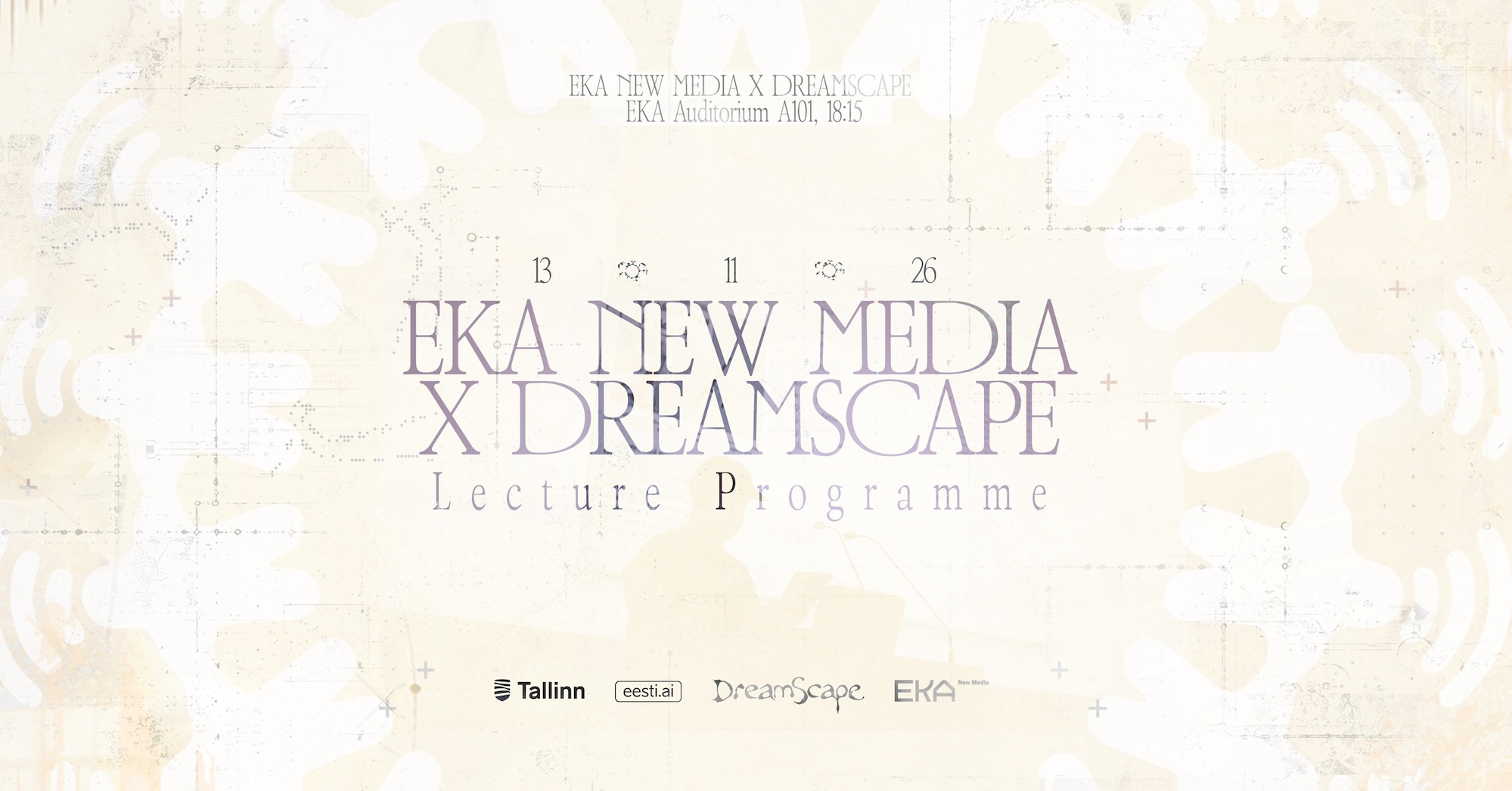
What does the future hold for electronic music - and how will we adapt? Although rife with innovative ideas and technological experimentation, electronic music can be a closely-guarded and introverted art form. Yet as new threats and opportunities now emerge daily, it seems like now is the right moment to open up a little and discuss the complex processes and sprawling ideas behind the sounds we have grown to love. On November 13th, Dreamscape and EKA New Media present a series of lectures at the EKA Auditorium from three medium-pushing figures in electronic music: Steve Goodman (aka Kode9), Silvia Kastel and Piotr Gwadera. The event will be free for anyone to attend. The evening consists of three lectures, each offering valuable insights on the current reality and the future of electronic music: 𝗦𝘁𝗲𝘃𝗲 𝗚𝗼𝗼𝗱𝗺𝗮𝗻 (𝗮𝗸𝗮 𝗞𝗼𝗱𝗲𝟵): “𝗦𝗼𝘂𝗻𝗱 𝗖𝗹𝗼𝘂𝗱 / 𝗗𝗮𝘁𝗮 𝗖𝗹𝗼𝘂𝗱 / 𝗞𝗶𝗹𝗹 𝗖𝗹𝗼𝘂𝗱” This presentation maps some of the ways contemporary conflict relates to the auditory domain in the age of machine listening. Taking the notion of the cloud as both a phenomena of atmospheric and computational intervention, themes will include acoustic weapons, the transition from shellshock to dronophobia and the role of AI within the spheres of acoustic defense, targeting systems and audio surveillance, questioning how musicians respond to this emergent auditory world? 𝗦𝗶𝗹𝘃𝗶𝗮 𝗞𝗮𝘀𝘁𝗲𝗹: “𝗘𝘅𝗽𝗹𝗼𝗿𝗶𝗻𝗴 𝗺𝘂𝘀𝗶𝗰-𝗶𝗻𝗱𝘂𝗰𝗲𝗱 𝗿𝗲𝘄𝗮𝗿𝗱, 𝗲𝗺𝗼𝘁𝗶𝗼𝗻𝘀 𝗮𝗻𝗱 𝗰𝘂𝗿𝗶𝗼𝘀𝗶𝘁𝘆 𝗮𝗰𝗿𝗼𝘀𝘀 𝗻𝗲𝘂𝗿𝗼𝘁𝘆𝗽𝗲𝘀” Her ongoing PhD in cognitive psychology and neuroscience takes a data-driven approach to explore how different neurotypes experience music in everyday life. In particular, by focusing on aesthetic emotions, curiosity, reward, and music preferences. 𝗣𝗶𝗼𝘁𝗿 𝗚𝘄𝗮𝗱𝗲𝗿𝗮: “𝗕𝗲𝘆𝗼𝗻𝗱 𝘁𝗵𝗲 𝗕𝗶𝗻𝗮𝗿𝘆 𝗣𝘂𝗹𝘀𝗲: 𝗣𝗼𝗹𝗶𝘀𝗵 𝗧𝗿𝗶𝗽𝗹𝗲-𝗠𝗲𝘁𝗲𝗿 𝗥𝗵𝘆𝘁𝗵𝗺𝘀 𝗶𝗻 𝗖𝗼𝗻𝘁𝗲𝗺𝗽𝗼𝗿𝗮𝗿𝘆 𝗘𝗹𝗲𝗰𝘁𝗿𝗼𝗻𝗶𝗰 𝗠𝘂𝘀𝗶𝗰” Piotr explores triple-meter rhythms in Polish traditional music and their relationship with contemporary electronic and club music. Starting from a broader question of why even-meter rhythms have come to dominate popular and electronic music worldwide, he focuses on the oberek, a Polish traditional dance with a distinctive rhythmic feel, and its unexpected affinities with Chicago footwork. With decades of experience in the music industry and strong academic backgrounds between them, our guests will give valuable clues to both help make sense of our present reality and to prepare for the future through the lens (or frequency) of electronic music. This event is supported by the Tallinn Education Department and eesti.ai