
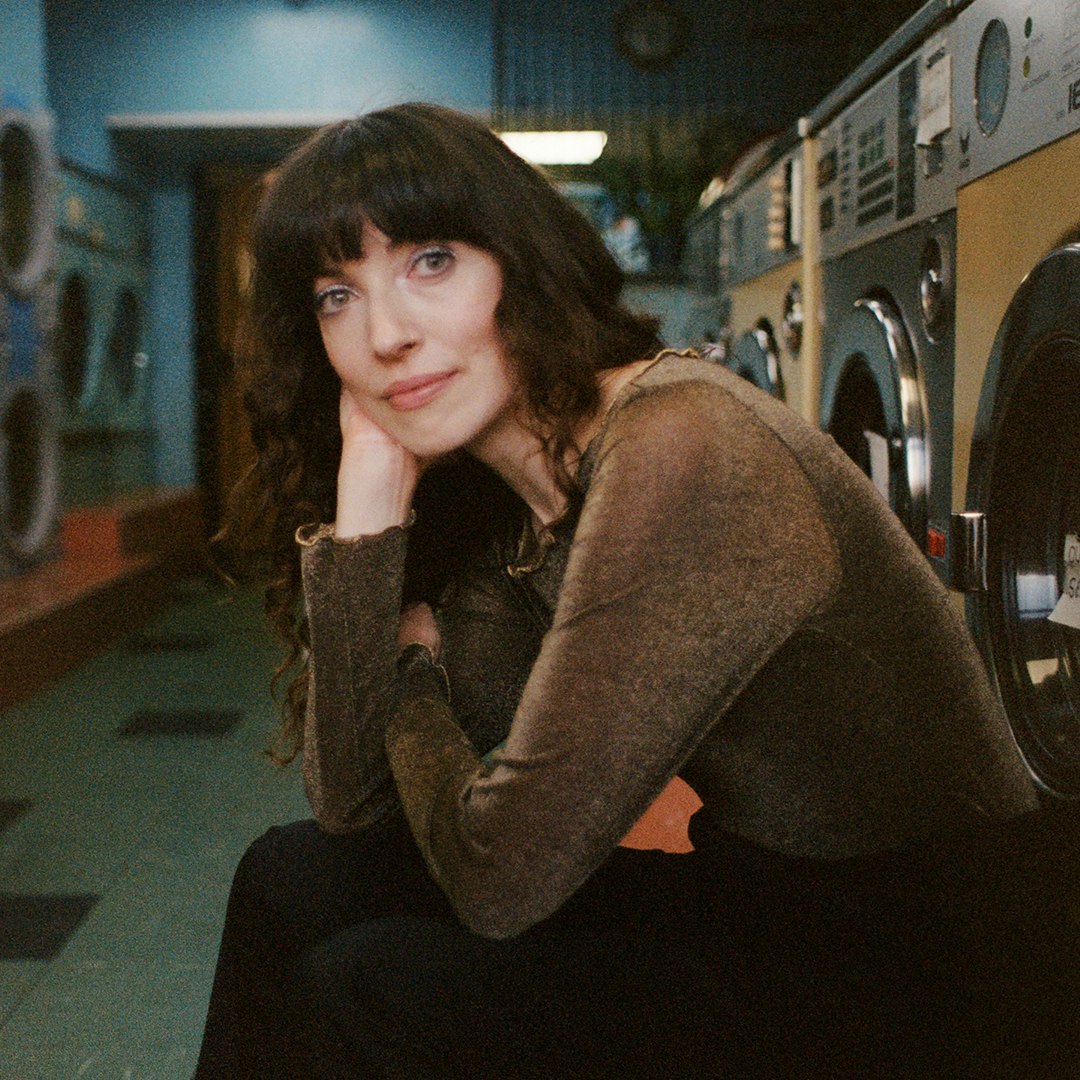
This event will take place in EartH Theatre. Elena Tonra didn’t intend to write a second Ex:Re album. The lead singer of Daughter released a solo record in 2018 and had only ever conceived of one record proper under that moniker. But in 2023, when she took some sketches of songs she’d had for several years into the studio with Fabian Prynn, who produced the first Ex:Re album, the pair’s musical compatibility once again took hold, and Save As was born. The title of album opener ‘Radio Station’, which begins with stately strummed acoustic guitar and morphs into a trippy song about an endless California road trip, is a metaphor for how Tonra feels about her mind. “The changing radio station is something I experience a lot – the push and pull of different feelings, and I end up getting stuck because I can’t make decisions,” she says. The song is formed from snippets of Tonra’s memories overlaid with scraps of overheard conversations. “I’ve ordered your coffee/Let’s fry all our money,” she sings, over a heady wall of guitars and Prynn’s upfront percussion. There is no grand, overarching storyline to Save As. Rather, the album is the latest in Tonra’s catalogue that expertly chronicles the gnawing minutiae of human consciousness: the over-thinking that consumes us, and the places we travel to escape. Its central theme is how we remember these moments. “My memory is not always very good,” Tonra admits. By preserving images in songs, she gives herself a means to remember. Listening to or performing them “is like travelling back in time”. For example, Tonra remembers exactly where she was when she wrote ‘Sleep’ – and just how she was feeling. She was alone in Paris, where she recorded a demo in her hotel, a texture that lives on in the track’s final cut, which features a melodic loop made from the demo’s acoustic guitar run through a vocoder and a drum machine. There’s a muffled texture to that sound, like hearing a party through a wall. Tonra’s highly felt alt-pop is not the first genre you’d expect to hear on the dance floor, but ‘Sleep’ is “something that I’d dance to!”, she says. Its vibe is “late night, after hours” – and defies the song’s title. That demo recordings live on in many of the final cuts is key to the sentiment of Save As: this is where we got to; we could record more and more versions; but preserving what we’ve got now is what would be most true. Other songs found their true version in the studio, after improvisation sessions that Tonra and Prynn always recorded, just in case. On the stand-out ‘Am I Even Real?’, a Tonra-Prynn duet that was built out from its first ever recording, Tonra sings about spaceships to ask whether she is being true to herself in a relationship. It began as a “really slow, really sad song”, she recalls. “Then one day we thought, ‘What would happen if we just…’ and we started playing the chorus really fast.” It stuck. That combination of long-held ideas stored in notebooks and on laptops with unfiltered first thoughts and improvisations is key to the album’s perfect mingling of liveliness and deep thoughtfulness. The record’s second half brings a more pared-back sonic texture, and with it some of the most direct songwriting of Tonra’s career. On ‘Frozen Aisle’, she sings of browsing for ice cream in the supermarket when she is overcome by a crushing feeling, a sensation far too overwhelming for the mundane situation she is in. How to create the sound of trying not to burst into tears in a public place? Tonra asked the assembled band – which included her long-time collaborator Josephine Stephenson on cello, Prynn on harmonium, Hinako Omori on synthesisers, Ben Reed on bass and Jethro Fox on electric guitar – if they would try to make their instruments sound like they were melting. “No good things to say” is Tonra’s refrain as the band bends its sound, disintegrating around her. Such direct lyricism is also wonderfully apparent on ‘Wasp’, on which Tonra sings of catching a creature in a jar and releasing it out the back door. For all this straight-talking, you can still rely on Tonra to provide some of the most elegant lyrics in modern songwriting. “Sometimes a death just has no deeper meaning / Than time,” she sings on ‘Healing (Slow)’, the album’s final track, which is about grieving the death of her grandmother. It’s a hopeful, loving track that brings the Ex:Re project back to its component parts – Tonra on vocals and guitars; Prynn on drums – and holds the human warmth of this most special of musical collaborations at its very core. For more information on access at EartH, please see our FAQs here: https://bit.ly/44dzl75 or contact us at access@earthackney.co.uk EartH is a social enterprise committed to supporting new musicians, with music studios in the venue that are completely free for young artists to use. When you attend a show in EartH Theatre, head to the back of the space to rent a cushion for just £2. Not only will you get to sit more comfortably, but all proceeds go towards funding Studio 36. Find out more here: https://earthackney.co.uk/about/studio-36/